Guide
How to Start a Car Rental Business
What actually matters when you go from an idea to your first paid rental: the legal basics, the first cars, the paperwork, and the systems that keep you out of trouble.
Start with a niche, not a fleet
The rental companies that survive their first two years rarely start as general-purpose agencies. They start with a niche where demand is predictable and competition from the big brands is weak: vans for movers and tradespeople, affordable cars near an airport the majors ignore, campervans in a tourist region, or long-term rentals for delivery drivers.
Your niche decides everything downstream: which vehicles to buy, what insurance costs, what your rental agreement must cover, and how customers will find you. Write down who your first fifty customers are and why they would choose you over a name they already know. If the answer is only price, reconsider the niche.
Legal setup and insurance
Register a legal entity before you buy vehicles; putting cars in your personal name mixes liability you will regret. Requirements vary by country, but every rental operation needs three things: a registered business, insurance that explicitly covers self-drive hire (a normal commercial policy does not), and a rental agreement that allocates risk between you and the renter.
Self-drive hire insurance is usually your single biggest operating cost after the vehicles themselves, and insurers will ask how you verify drivers, how you record vehicle condition, and how you collect deposits. Having documented processes for these from day one lowers premiums and, more importantly, keeps claims from being rejected.
Your first vehicles
Buy for utilization, not for love. A car that rents twenty days a month at a modest rate beats an impressive one that rents five. For a first fleet, three to five identical or near-identical vehicles are easier to price, maintain and substitute than five different models.
Decide early whether you buy used with cash, finance new, or lease. Used-and-owned keeps monthly costs low and suits seasonal demand; financing preserves cash but locks in monthly obligations that continue whether the cars rent or not. Whichever route you choose, model your break-even: monthly cost per car divided by realistic rental days tells you the minimum daily rate you can accept.
Pricing your rentals
Start from your costs, not from the competitor down the street. Add up everything one car costs you per month: financing or depreciation, insurance, road tax, maintenance and tyres, cleaning, parking and your booking tools. Then divide by the number of days it will realistically be rented, not the number of days in the month.
A worked example: a used compact car costs you 450 EUR a month all-in. If it rents 18 days a month, your break-even is 25 EUR a day. Renting it at 35 EUR a day leaves 10 EUR of margin per rental day, about 180 EUR a month, before paying for your own time. If demand drops to 12 days, the same car needs 37.50 EUR a day just to break even, which is why utilization matters more than the headline rate.
Once the floor is clear, set the rest deliberately: higher rates in peak season and at weekends, lower daily rates for weekly and monthly rentals, a mileage allowance with a per-km charge above it, a deposit sized to your insurance excess, and paid extras such as child seats, additional drivers or delivery. Then compare with local competitors to check you are in a believable range.
The paperwork that protects you
Every rental needs a signed agreement that records the parties, the vehicle, the period, the price, existing damage, the fuel level, mileage limits, the deposit, and who is liable for what. Disputes almost always come down to what was documented at handover: dated photos of the vehicle's condition and a marked damage diagram settle arguments that words cannot.
You can generate a solid agreement for free with RentingPal's rental agreement generator, customize the clauses to your niche, and download it as a PDF. When volume grows, rental software generates the agreement automatically for each booking and collects the signature digitally.
Getting your first bookings
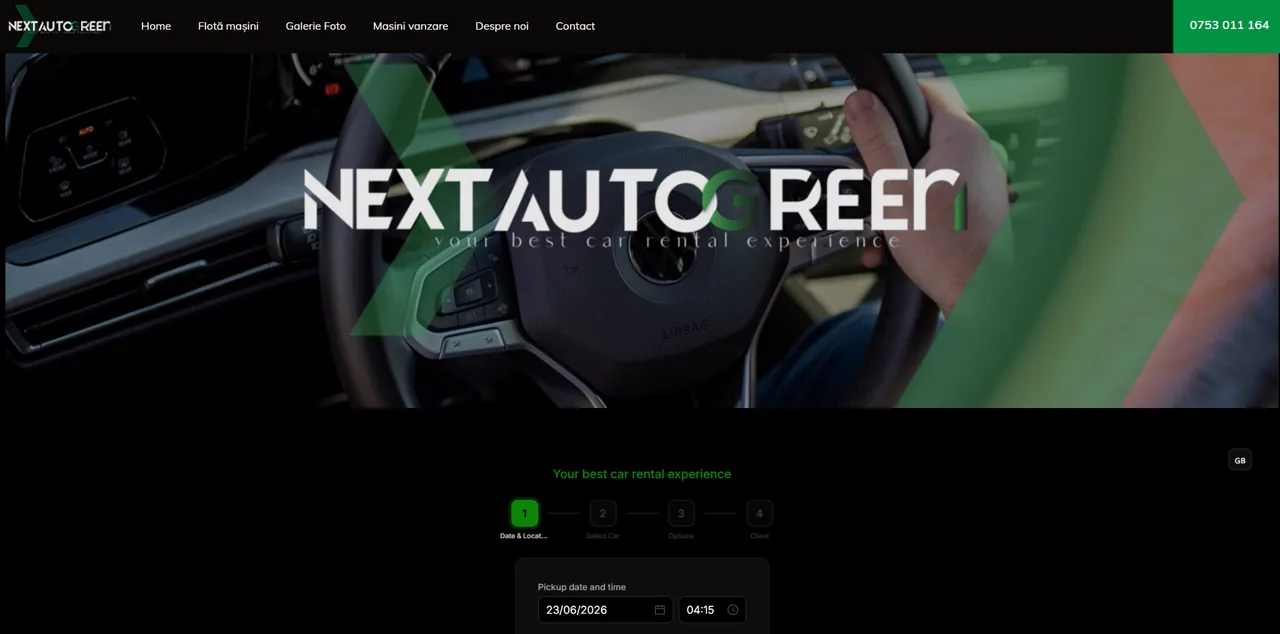
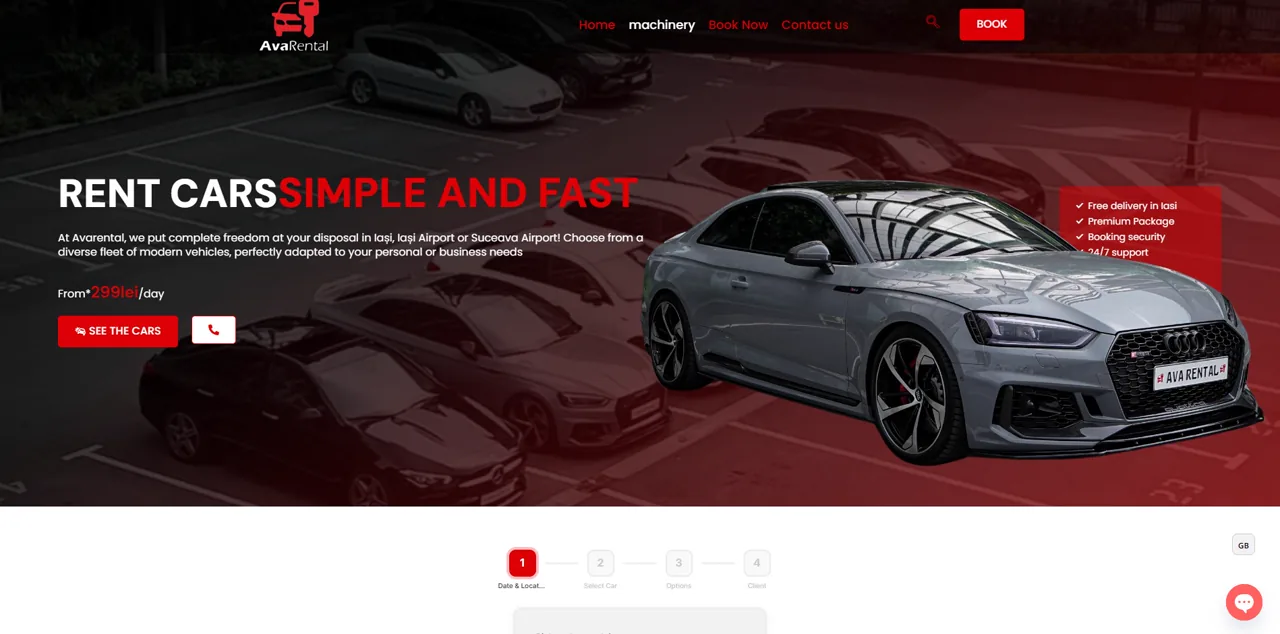
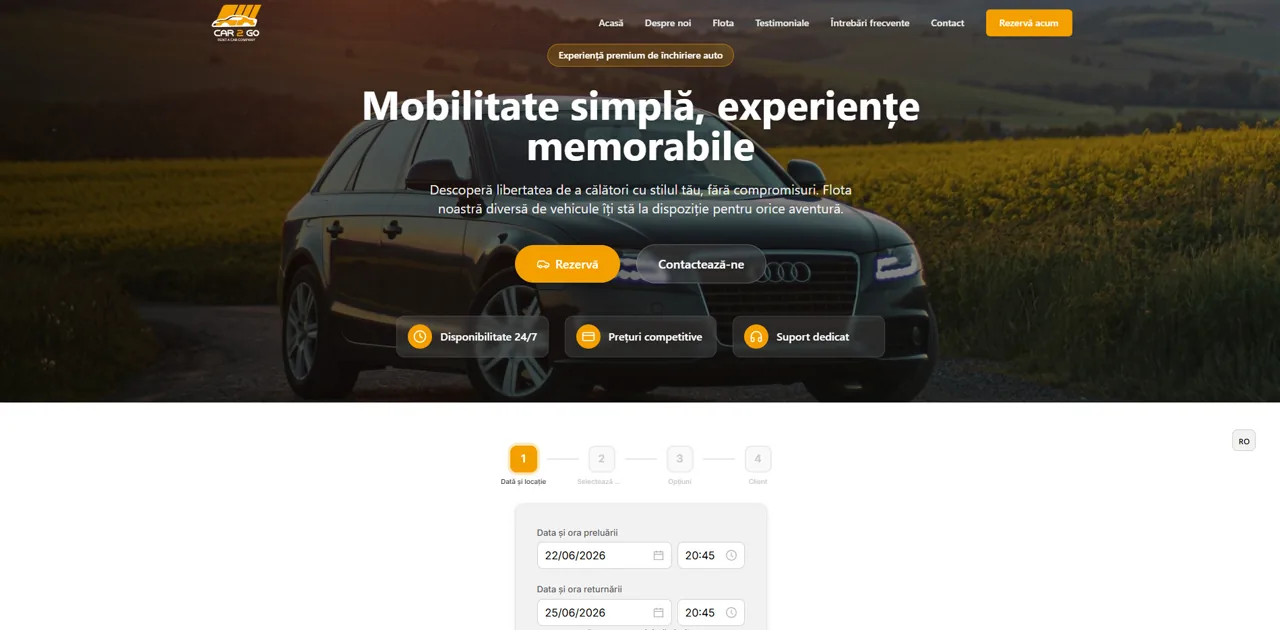
New rental businesses get their first customers from three channels: a Google Business Profile with real photos and reviews, a simple website where people can actually book (not just a phone number), and partnerships with the businesses your niche already visits: hotels, repair shops, moving companies, flight schools, relocation agents.
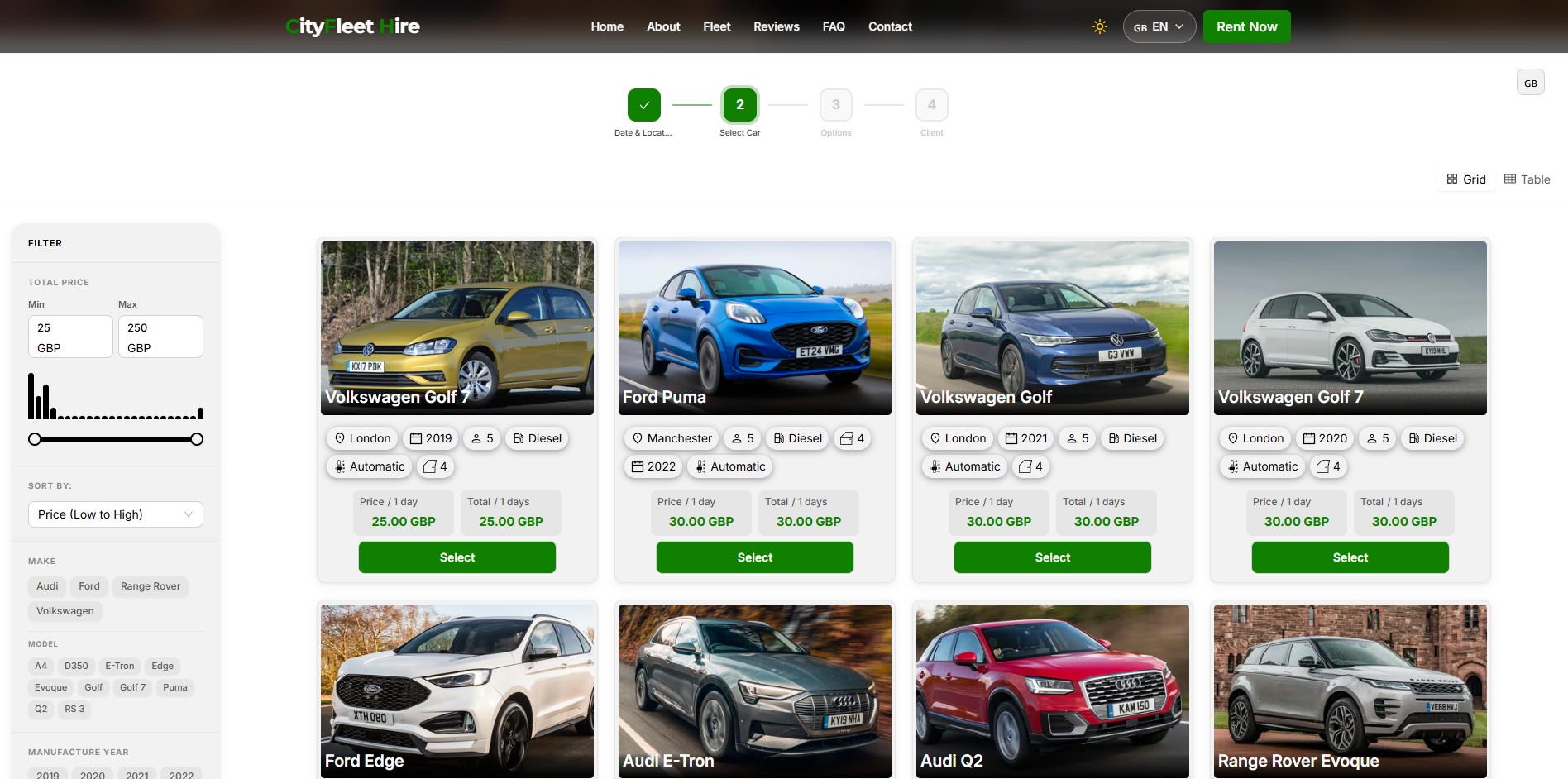
Online booking is not optional anymore. Renters compare three or four options in one sitting and book the one that confirms availability instantly. A booking page that shows live availability converts evenings and weekends when you are not answering the phone.
The systems that keep it running
At three cars you can run on a spreadsheet and a phone. At ten, double bookings, forgotten deposits, expired insurance documents and untracked damage start costing real money. The operators who scale smoothly put a system in place before the chaos, not after.
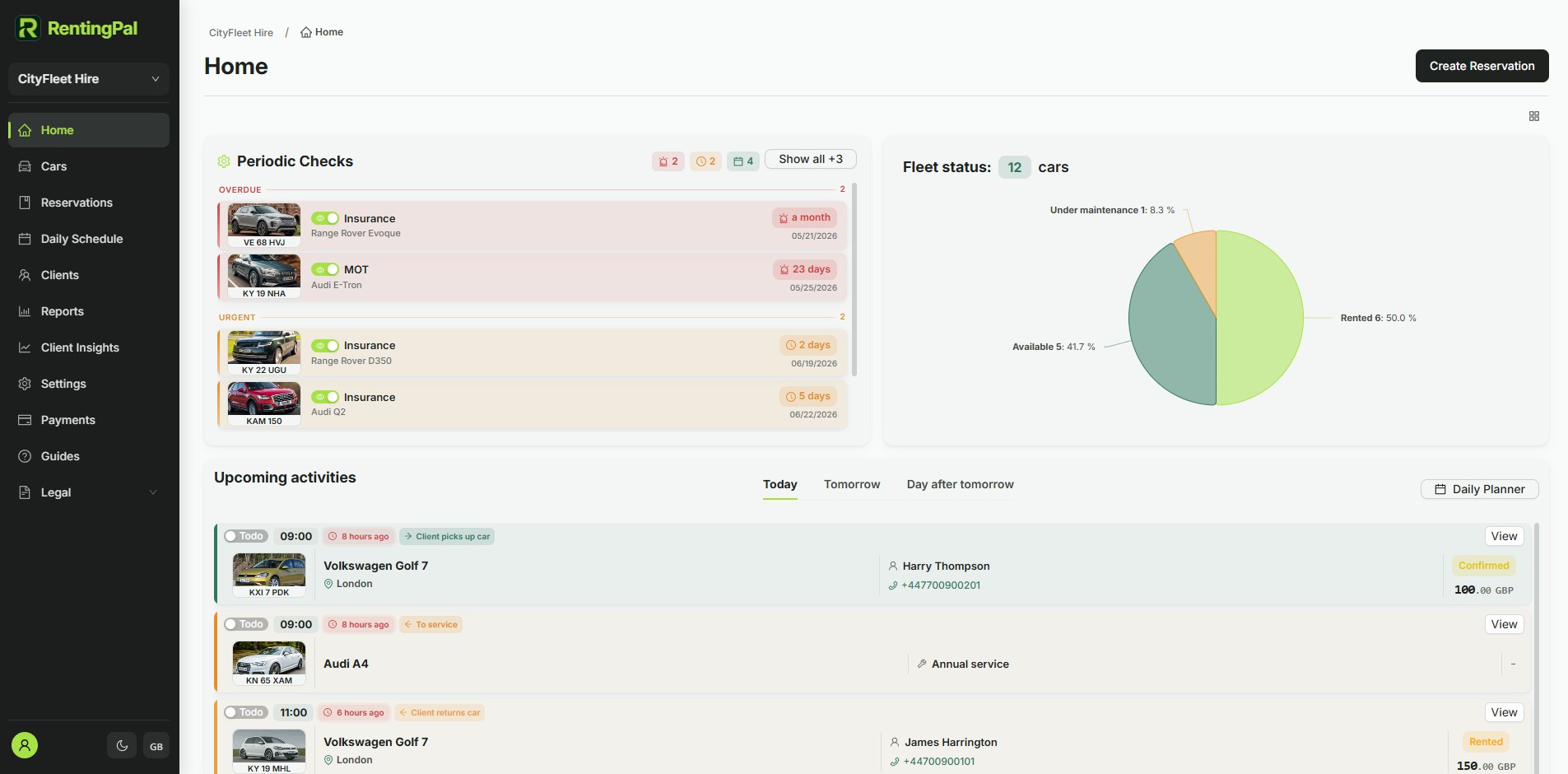
Rental management software handles the loop end to end: online booking with live availability, automatic rental agreements with digital signatures, deposits and payments, damage records with photos, maintenance reminders, and invoices. RentingPal does all of this at 2 EUR per car per month with a 20 EUR minimum and a 30-day free trial, so the cost scales with the fleet instead of ahead of it.
Frequently asked questions
How much does it cost to start a car rental business?
The dominant costs are vehicles and insurance, and both vary enormously by country and niche. A lean start with three used vehicles is often possible for the price of one new car; self-drive hire insurance is typically the largest recurring cost after vehicle financing. Software, by contrast, is marginal: RentingPal costs 2 EUR per car per month.
Do I need special insurance to rent out cars?
Yes. Standard commercial vehicle insurance does not cover self-drive hire. You need a policy that explicitly covers vehicles rented to third-party drivers, and insurers will expect documented driver checks and condition records.
Can I start a car rental business with one car?
Yes, and many operators do, but one car means one point of failure: a single accident or long repair takes your whole fleet offline. Plan the path to three or more vehicles quickly, because fixed costs (insurance minimums, your time) spread much better across a small fleet than a single car.
What software do I need to start?
From day one you need a way to take bookings, generate signed rental agreements, and track vehicle condition and maintenance. RentingPal covers all of it, including an embeddable booking widget or a hosted booking site if you have no website yet, with a 30-day free trial.