Guide
Fleet Utilization: the Number That Runs a Rental Business
Utilization tells you whether your capital is working. Here is how to measure it honestly, what a bad number is really telling you, and the levers that move it.
What utilization actually is
Fleet utilization is rented days divided by available days over a period, per vehicle and across the fleet. Available days matter: a car in the workshop for a week is not available, and counting it hides the real problem. Track both numbers (utilization of available days, and days lost to maintenance) or the metric will flatter you.
Measure it monthly per vehicle. Fleet-wide averages hide the two cars that barely rent, and those two cars are usually where the money is leaking.
What drags utilization down
The usual suspects, roughly in order of frequency: vehicles that do not match demand (the fleet-mix problem), booking friction (no online booking, slow responses, no visible availability), turnaround time between rentals (cleaning and inspection eating a full day), unplanned maintenance from skipped servicing, and seasonal demand swings with a fleet sized for the peak.
Notice that price is not at the top of the list. Cutting rates to fix a utilization problem that is really a fleet-mix or friction problem just converts an idle fleet into a busy unprofitable one.
The levers that raise it
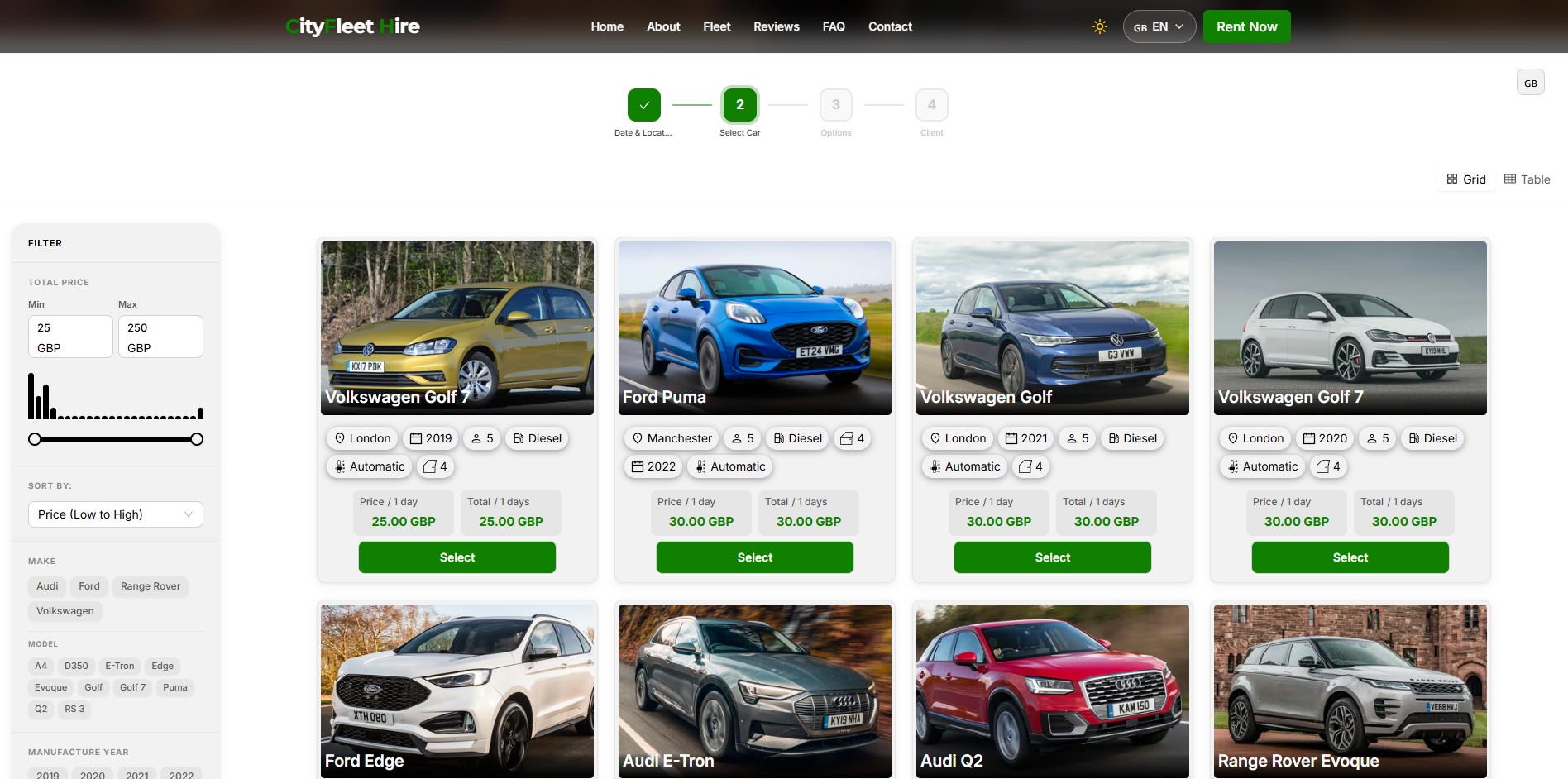
Sell the calendar you already have: online booking with live availability captures the renters who book outside office hours and will not wait for a callback. Shorten turnarounds with a standard return checklist (photos, fuel, damage diagram) so a returned car is rentable the same day.
Fix the fleet mix with data: vehicles consistently below the fleet average for three months are candidates for sale or replacement with what actually rents. Use duration discounts to convert idle weeks into long bookings, and schedule maintenance in your predictable low season instead of losing peak days to it.
Tracking it without a spreadsheet project
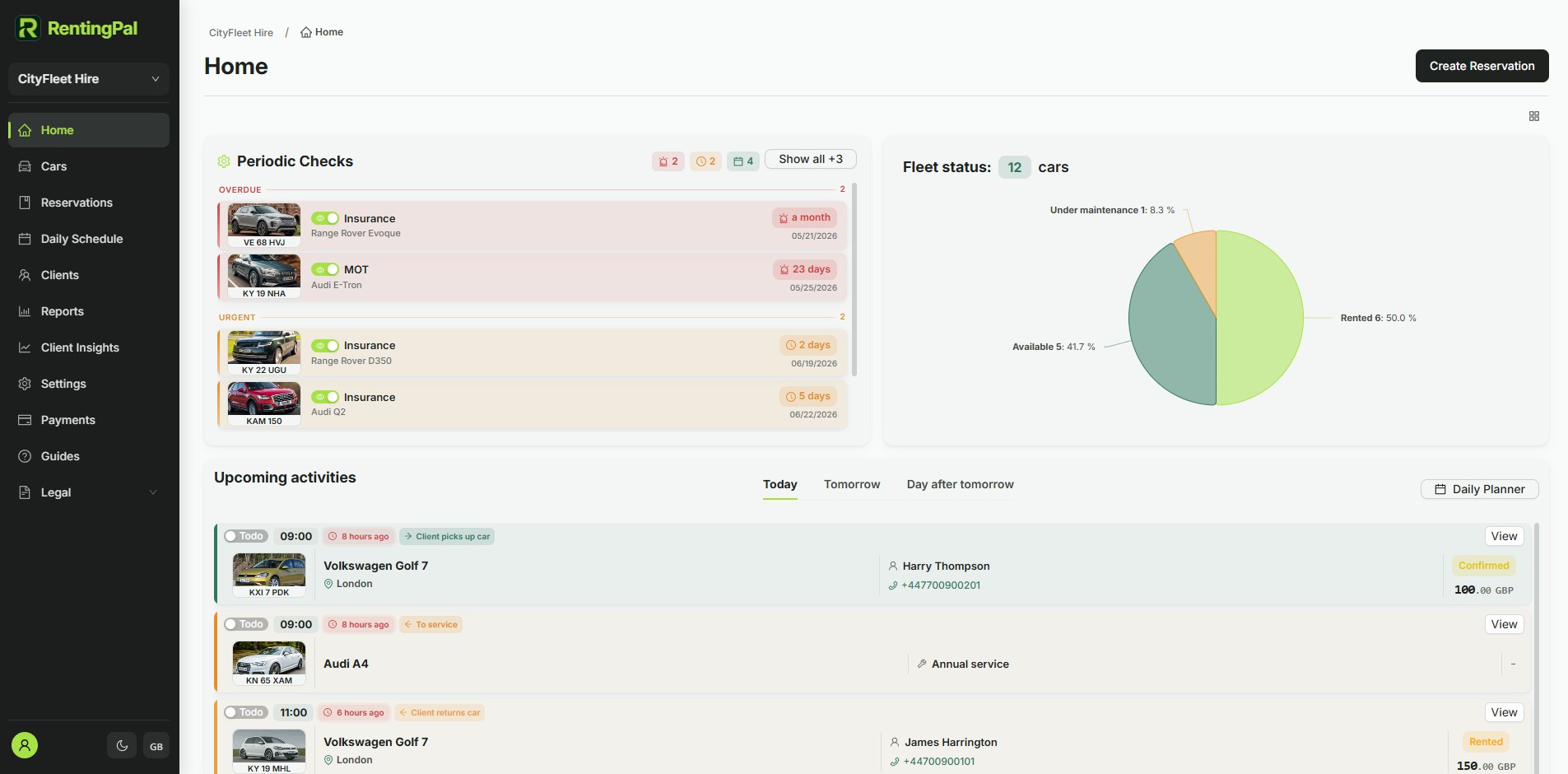
You can compute utilization in a spreadsheet from your booking calendar, and at five cars that works. Past that, the bookkeeping eats the benefit. Rental management software tracks rented days, maintenance blocks and availability as a side effect of normal operation, so per-vehicle utilization and revenue reports are simply there when you need them.
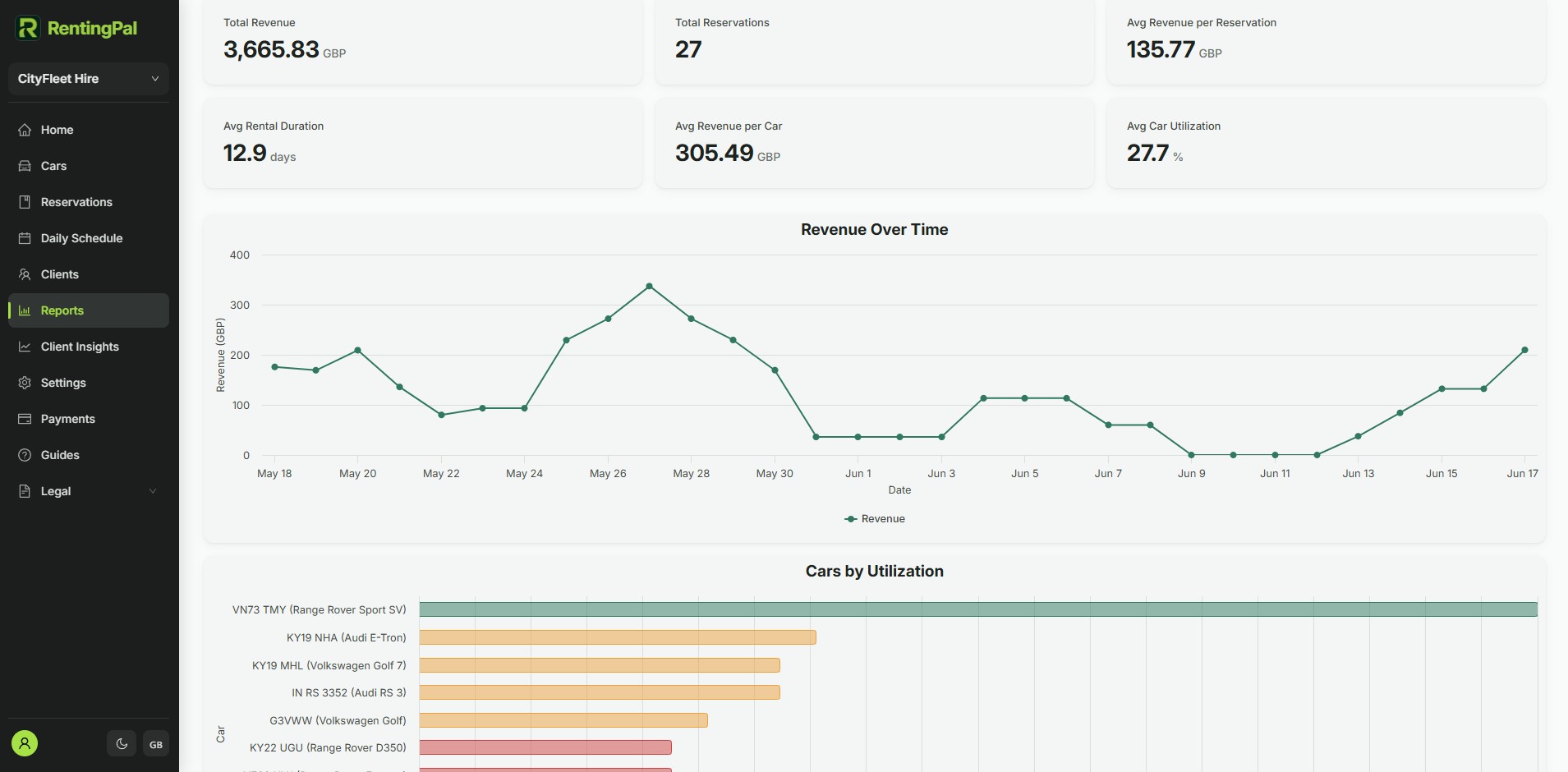
RentingPal shows fleet utilization, revenue per car and maintenance downtime in its reports, and its maintenance reminders keep servicing from turning into unplanned lost days.
Frequently asked questions
What is a good utilization rate for a rental fleet?
It depends on niche and season, and chasing a universal benchmark misleads more than it helps. The useful comparisons are your own trend month over month, and each vehicle against your fleet average. Persistent outliers below the average are the actionable signal.
Is 100 percent utilization the goal?
No. At very high utilization you are turning away demand, deferring maintenance and one accident away from cancelled bookings. Sustained very high utilization is the signal to raise prices or add vehicles, not a target to hold.
How do maintenance days factor in?
Track them separately as unavailable days. A car with high utilization of available days but two workshop weeks per quarter has a maintenance problem, not a demand problem, and the fix is different.